
When I sat down with Jason Schappert on my podcast, Innovate & Overcome, I didn’t expect how closely his experiences would mirror the kinds of financial journeys so many of us face.
Jason’s known as a tech founder today, but his story started in the skies. He built a flight training business online during a time when online education wasn’t widely accepted. As we talked, I saw how each stage of his journey shaped his thinking on money, resilience, and personal freedom.
A Crisis That Sparked a Calling
Jason shared that he was running his online flight school while flying full-time. That kind of schedule took everything he had. Then one month, everything unraveled.
“There was a tow truck in my driveway. I knew why it was there,” Jason said. “That same week, I got a foreclosure notice, and then my plane lost a cylinder mid-flight.”
That cascade of events would have crushed many. I asked him what kept him going.
“I couldn’t afford not to make this work,” he said. “There was no safety net.”
That moment forced him to make a clear decision. He turned all his focus and energy to the business he was building.
Starting Small and Scaling Smart
Jason launched with just eight lessons. No marketing team. No platform integrations. He picked up the phone and called every new customer.
“One guy said, ‘I just want to fly to see my grandkids,'” Jason told me. That helped him realize his real audience wasn’t aspiring professionals, but everyday people.
He shifted his messaging and offerings to reflect that reality. This change helped the business gain traction because it solved problems that mattered.
“You don’t have to get it right. You just have to get it going,” Jason said. That line stuck with me.
Building a Team and Letting Go
Growth required a team. Jason began hiring and training people to take over various tasks. Letting go of control was difficult.
“I used to rewrite every email,” he admitted. “I’d swap out words just to feel involved.”
Eventually, he created systems that gave his team structure. Those systems allowed the business to grow without bottlenecks.
“Letting go was tough, but it gave me freedom,” he said. “And that freedom showed me what real wealth looks like.”
That idea resonated with me. Wealth is the ability to make choices that align with your values.
Jason Schappert Second Act: Moola
At 36, Jason sold the business. With time and financial space, he started exploring what came next.
“With flying, I gave people the freedom of the skies. I wanted to do the same with money,” he said.
That vision led him to build Moola, a financial tool that helps people create savings goals, track spending, and improve financial behavior.
“People don’t need more spreadsheets. They need guardrails and nudges.”
Moola gives users a structure they can follow without feeling overwhelmed. It fits squarely with the philosophy behind Infinite Banking. Just like a properly designed whole life policy gives you a system to manage and access capital, Moola gives people a system to manage day-to-day spending and savings with intention.
This approach reminds me of what my mentor, Nelson Nash, always said—“When you control the banking function in your life, you win by default.” Moola supports that same principle: control through awareness.
A Financial GPS
Jason shared stories about Moola users who recovered hundreds in forgotten expenses—duplicate subscriptions and overpriced rent.
“People know they should save, but they don’t know where to start,” Jason said. “We show them their money, no judgment, just data.”
This mirrors the visibility you get with your own banking system. When you’re the banker, awareness is your edge. Moola acts like a GPS for your finances, much like your policy loan activity shows you where your capital is flowing.
Investing with Intent
Moola also includes tools to support investing. It uses data, sentiment scores, and multiple metrics to help users evaluate opportunities.
“We adjust everything based on age, goals, and risk tolerance,” he explained.
This reflects one of the core principles we talk about with IBC: every decision must align with your individual timeline and objectives. Moola helps surface opportunities that fit, not based on hype, but based on your personal financial landscape.
That reminded me of conversations I’ve had with thought leaders like Kim Butler and Dan Sullivan. They also emphasize personalized strategies over cookie-cutter advice, which aligns perfectly with what Moola is doing.
Teaching Through Technology
Jason mentioned a firefighter who used Moola to create a savings pocket for his kids’ education. That step gave him direction and a plan.
“Sometimes, all it takes is a simple prompt,” Jason said. “You don’t need a finance degree. You just need a little structure.”
Moola’s prompts work like the policy statements and cash flow diagrams we use in Infinite Banking. They turn vague goals into specific actions.
Final Thoughts
My conversation with Jason reinforced several key lessons for anyone practicing Infinite Banking:
- Talk to your audience and adapt your offer to their reality.
- Get started before you feel ready. Progress creates clarity.
- Use systems and tools that increase visibility and control.
- Empower yourself with tools like Moola to complement your banking system.
Jason ended with a story I’ll never forget. A pilot emailed him with the subject: “You saved my life.” The man remembered Jason’s emergency flight training and applied it during a real in-flight crisis.
“That’s when I realized we weren’t just teaching but changing outcomes,” Jason said.
Now, through Moola, he’s working to change financial outcomes and offering people tools to make better decisions.
For those of us practicing Infinite Banking, Moola is a natural companion. It gives you the day-to-day awareness to complement the long-term strategy of your policy.
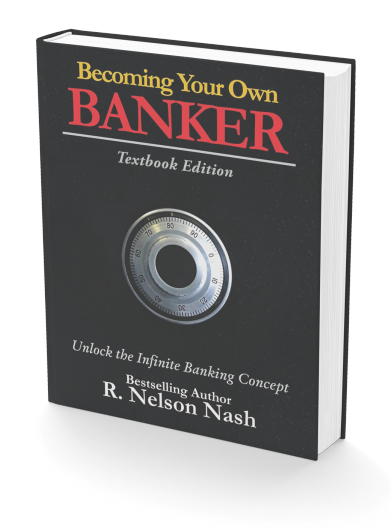
Want to discover how to take control of your financial future? Check out “Becoming Your Own Banker“.